
big event
How to Prep Your Hair for a Wedding or Big Event: A Realistic Timeline
Every other hair decision you make is reversible on your own schedule. This one is not. The reason it is worth knowing how to prep your hair for a wedding or any other big event is not that the hair needs something exotic. It is that the date cannot move, and a fixed date quietly inverts the whole question. Most of the year you are asking what you could do to improve your hair. In the eight weeks before a wedding, a formal, a milestone birthday or a day that will be photographed from every angle, the better question is what you should stop doing, and when.
That is the part almost nobody plans. People book the colour, book the stylist, and then, about nine days out, panic and try three new products at once. This is a timeline instead: what belongs eight to twelve weeks out, what belongs in the middle, what belongs in the final fortnight, and what belongs in the bag on the day.
Why a fixed date changes the plan
Two things about hair make a deadline awkward.
The first is that hair grows slowly and from one end only. Scalp hair grows at roughly a centimetre a month for most adults, so the length you will be wearing on the day is, almost entirely, the length you already have. Nothing you buy changes that. Condition, shine and manageability are genuinely improvable in two months. Length and the structural condition of the oldest ends are not.
The second is that most of the things that visibly improve hair are cumulative, while most of the things that visibly ruin it are instant. A conditioning habit works over several washes. A reaction to a new colour, a smoothing service that drops more volume than you expected, or a toner that pulls cooler than the swatch all happen in one appointment. So the risk is asymmetric, and the timeline should be built around risk, not around improvement.
Practically, that gives you three zones. Early on, you can try things. In the middle, you build habits. In the last fortnight, you lock it down.
Eight to twelve weeks out: the only sensible window for anything new
If you want to change your colour, change your cut, or have a smoothing or keratin service, this is where it goes. Not because the results take two months to appear, but because this is the only point where a result you dislike still has room to be fixed, grown out, or toned down before the day.
Three specifics worth booking early rather than late.
A colour change, not a colour top up. Going significantly lighter, significantly darker, or into a different tonal family is a service you want to live with for a few weeks before you commit to it in photographs. A root touch up or a gloss is a different matter and belongs much closer to the day.
Any new colour on a new scalp. If you have never used a particular colour product before, or you are seeing a new colourist, the patch test matters. Allergic reactions to hair dye are uncommon but real, and they are not something to discover the week of a wedding. Ask for the test at the consultation, not on the day of the service.
A smoothing or keratin service. These change how your hair behaves, not just how it looks, and the change is not fully predictable in advance. Some protocols also ask you to leave the hair unwashed for a period afterwards. Weeks, not days, before the event.
What to do in the fortnight before that colour appointment is a separate subject with its own rules, and there is no point repeating them here. If you are booking colour as part of your event prep, read should you wash your hair before a colour appointment and follow that, then come back to this timeline.
How to prep your hair for a wedding four to six weeks out
This is the habit window, and it is the part that actually earns you something. The goal is simple: by the day, the hair should be conditioned enough to take heat and tension without looking stressed.
Pick one treatment and use it consistently. A weekly deep conditioner or mask over five or six weeks will do more than the same product used twice in the final fortnight, because the effect is a surface and partial penetration effect that accumulates with repeated contact and then washes off again. A mask like Floractive Marroco Golden Plus Mask 250g is the kind of thing to put on a Sunday and leave on a Sunday. If your hair is finer and a rich mask leaves it limp, choose a lighter one from the masks range rather than skipping the habit altogether.
Two things to resist in this window. Do not escalate the treatment because you cannot see a change yet; most conditioning changes in how hair feels, not in how it photographs, and feel is what makes the styling work. And do not start two new products in the same week, because if something goes wrong you will not know which one did it.
If you are having a cut, this is also where a shaping cut belongs. A trim for the ends can sit much later. A change of shape should not.
Two weeks out: clear the build up, then stop experimenting
Hair that has carried weeks of mask, oil, dry shampoo and styling product does not take a set as well. Silicone and polymer residue, plus mineral deposits if you are on hard water, make the fibre slicker and heavier, which is exactly the opposite of what a stylist needs to build volume or hold a pin.
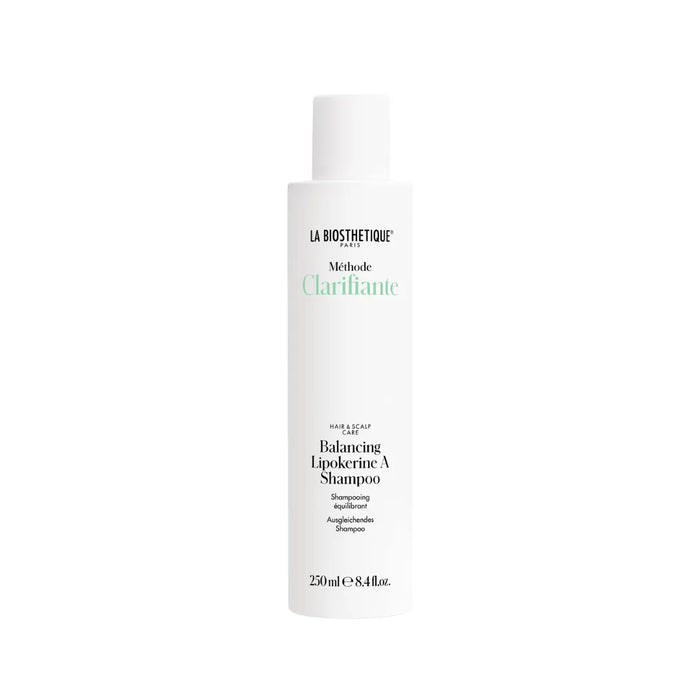
So clear it, once, with a detox or clarifying wash such as DunGud Reset Detox Shampoo 250ml, about two weeks out. Two weeks rather than two days, for two reasons. A proper clarifying wash can leave hair feeling drier and squeakier than usual for a wash or two, and you want your normal conditioning routine to settle it back down before the day. And if your colour sits on the cooler side, clarifying can shift tone slightly, which you want to find out about with time to put a gloss over it.
After that wash, the experimenting stops. From a fortnight out, use only products you have used before. This is the single most useful rule on this page, and it is the one most often broken.
The week of: the trial, the trim and when to wash
If you are having your hair styled professionally and a trial is offered, take it, and treat it as a rehearsal rather than a preview. Arrive with your hair in the condition it will be in on the day, not freshly washed if you plan to arrive on second day hair. Photograph the result from the back and the sides, in daylight and in indoor light, because an updo you love in the mirror can read differently in a photograph. Say out loud what you want changed while you are still in the chair.
Any trim for the ends sits comfortably three to seven days out. There is no advantage to cutting the morning of, and a small amount of settling time makes a blunt line look less severe.
On washing: most stylists want hair clean but not slippery, which in practice means washed the day before rather than the morning of. Freshly washed hair is softer and harder to grip, and an updo built on it tends to slide. If your hair is very fine or very oily and a day old genuinely looks greasy, wash the morning of and tell your stylist, so they can build grip back in with product. Either way, decide in advance and mention it at the trial rather than improvising.
The morning of: heat, hold and what goes in the bag
The day itself is execution, not improvement. Three things matter.
Protect the hair you are about to heat. Event styling usually means more heat and more passes than a normal day, often on hair that will then be pinned and sprayed. Use a heat protectant you already know, such as K18 Heatbounce 118ml, or something comparable from the heat protection range, and use it on damp hair before drying rather than on dry hair just before the iron.
Do the blow dry properly, or have it done. A set that holds for twelve hours is mostly a function of how well the hair was dried and cooled, not how much spray went on at the end. The method is covered step by step in how to blow dry hair properly, and the section on cooling each piece before you release it is the part that matters most for an all day style.
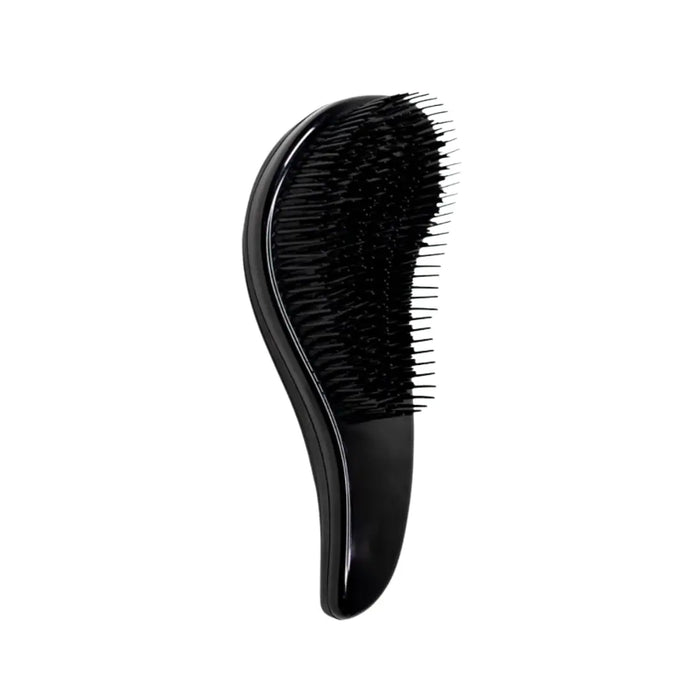
Choose a hold you can touch up. A rigid finish looks set and photographs stiff, and it cannot be fixed once it moves. A workable spray such as DunGud POMP Workable Hairspray 304ml lets you reshape a section at hour six instead of starting again. Then put a travel size of the same category in the bag, something like La Biosthetique Classic Formule Hair Laque Travel RT 75ml, along with a few of the pins your stylist used and a small brush. Almost every on the day rescue is a pin that has shifted, not a style that has failed.
What a stylist would tell you not to do
Four things, honestly, do more damage than any product fixes.
Do not try a new colour, a new stylist and a new style in the same three weeks. Change one variable at a time, so you know what to blame.
Do not clarify, mask, oil and heat style all in the last five days. Hair that has been stripped and then saturated behaves unpredictably.
Do not treat a sudden hair problem in the final fortnight as a shopping problem. A flaking, itching or sore scalp, or a noticeable increase in hair coming out, is not solved by a mask, and a bond or protein treatment is not a remedy for either.
Do not plan around an outcome no product delivers. Nothing applied to hair adds length, closes a split end permanently, or regrows a hair. If the plan depends on one of those, the plan needs changing, not the shopping list.
When to see a professional instead of buying something
Two different kinds of professional, for two different problems.
For the hair itself, a consultation several weeks out is worth more than any product decision, because a stylist looking at your hair can tell you what your chosen style will actually need and whether your hair will hold it. If you do not already have someone, you can find a HUSL stylist through our pros and book a consultation rather than a service, which is a reasonable thing to ask for.
For anything medical, see a doctor and do not let the event timeline talk you out of it. Book a GP or dermatologist appointment, rather than buying a treatment, if you notice any of the following: a sudden or patchy increase in hair loss; a scalp that is persistently sore, scaly, weeping or very inflamed; a rash, swelling or burning sensation after a colour service; bald patches with a defined edge; or hair shedding alongside other symptoms such as fatigue or unexplained weight change. None of these is an event problem and none of them is something a shampoo fixes. Starting earlier gives a clinician more room to help, which is a good reason to raise it now rather than in the last fortnight.
Frequently asked questions about event hair prep
How far in advance should I get my hair coloured before a wedding?
For a colour change, eight to twelve weeks, so there is room to adjust it. For a root touch up or a gloss on colour you already wear, one to two weeks out is usually ideal: fresh enough to look even, with a little time for tone to settle and for any correction to be made.
Should I wash my hair the day before or the morning of?
The day before suits most people and most styles, because clean but not freshly washed hair grips pins and holds a set better. Wash the morning of if your hair genuinely looks oily at a day old, and tell your stylist either way so they can adjust the products they use.
Is a hair trial worth the money?
If you are wearing a style you have never worn, yes, mostly because of what it rules out. The value is finding out that a particular updo does not suit your hair density, or does not survive four hours, while there is still time to choose something else.
Can I improve damaged hair in six weeks?
You can improve how it feels, combs and shines, and that genuinely makes styling easier and the result smoother. You cannot restore the structure of ends that are already split or very porous, and no product makes hair longer. A trim plus a consistent conditioning habit is the honest version of that plan.
What should I pack for the day?
A travel size of the spray used on your hair, a few of the same pins your stylist used, a small brush or comb, and a mirror you can hold behind your head. Keep it to touch ups. Nothing new goes in the bag.
My scalp has flared up the week before. What do I do?
Stop adding products, keep washing gently with something you already tolerate, and see a pharmacist or doctor rather than buying a treatment on the strength of the deadline. An irritated scalp plus a new active ingredient plus a long day of pinning and spray is the combination most likely to make the week worse.
The short version
Eight to twelve weeks out, make the changes. Four to six weeks out, build one conditioning habit and stick to it. Two weeks out, clear the build up, then stop trying new things. The week of, rehearse, trim and decide your wash timing. On the day, protect the hair, dry it properly, and choose a hold you can touch up. The hair you turn up with is mostly the hair you already have, and the work is in protecting it rather than in finding one more product.