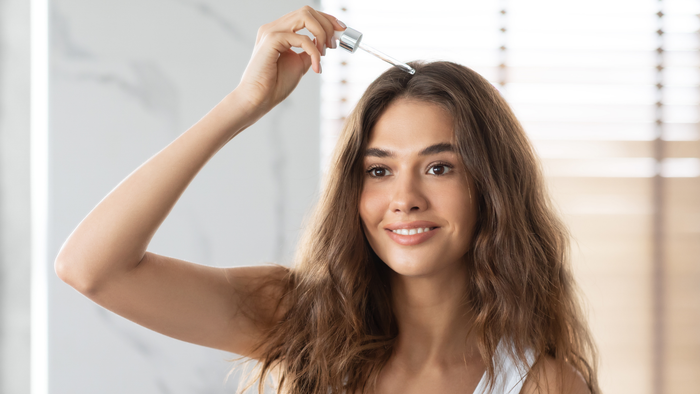

ask a pro
Ask a Pro: Why Does My Hair Feel Different in Winter?
Your routine has not changed, but your hair has. A stylist explains why hair feels different in winter and the four adjustments that actually fix it.
Every month our stylists answer the questions they get asked most behind the chair. This month: the seasonal one.
"My routine hasn't changed at all, but from about June my hair feels completely different — drier, flatter, full of static, and it tangles more. Why does my hair feel different in winter, and do I actually need to change anything?"
You are not imagining it, and no, your shampoo has not stopped working. Your hair feels different in winter because almost everything around it has changed — the humidity in the air, the temperature of your shower, the heating in your house, and the amount of friction from scarves, collars and beanies. Hair is a porous fibre that responds to its environment constantly. Change the environment and you change the hair, even if the routine is identical.
Here is what is actually happening, and the small adjustments that make the biggest difference.
Why does my hair feel different in winter? The four causes
1. The air is holding less water
Hair is hygroscopic — it absorbs moisture from the air and gives it back. In humid weather that is why hair swells and frizzes. In cold, dry air the exchange runs the other way: the air pulls moisture out of the hair shaft, and the hair is left drier, rougher and more brittle than it was in February.
Indoor heating makes it worse. A heated room in winter is often drier than the air outside, so you are getting a double dose. This is the single biggest reason hair feels straw-like from June through August in most of Australia.
2. Hot showers are stripping the lipid layer
Nobody takes a cold shower in July. But very hot water strips the natural oils from both hair and scalp far more aggressively than warm water does, and those lipids are what keep the cuticle smooth and sealed.
You do not need to suffer through a cold shower. Dropping the temperature from very hot to comfortably warm, and doing a final cool rinse on the hair only, is enough to make a noticeable difference within a fortnight.
3. Static and friction from winter clothing
Static is a winter-specific problem because dry air does not conduct charge away. Add wool jumpers, scarves and beanies rubbing against the hair all day and you get lifted cuticles, flyaways, and — over months — mechanical damage that shows up as breakage around the shoulders and the crown.
This is also why winter hair tangles more. A raised, roughened cuticle catches on itself.
4. Your scalp is behaving differently too
The same dryness that affects the hair affects the skin on your head. A tight, itchy or flaky scalp is a common winter complaint, and it often gets misdiagnosed as dandruff and treated with an anti-dandruff shampoo that makes the dryness worse. We have written a full guide to this in winter scalp care: how to stop flakes and itch in the cold — worth reading if flaking is your main symptom.
What a stylist actually changes for winter
Not everything. Four adjustments cover most of it.
Wash less often, but condition more thoroughly
If you are washing daily out of habit, winter is the season to stretch it. Every wash removes some of the lipid layer you are already short on. Two to three washes a week suits most hair types in cold weather. On the washes you do, leave the conditioner on for a full two to three minutes rather than rinsing it straight out — contact time is doing more work than product volume.
Add a leave-in, not just a heavier conditioner
A rinse-out conditioner works while it is on. A leave-in keeps working all day, which is exactly what you need when the air is pulling moisture out for twelve hours straight. De Lorenzo Revive Moisture Repair 125ml is a light repairing lotion that suits fine to normal hair, and Microtexx Instant Spray Protector 250ml is a good option if your main winter complaint is tangling — it detangles and protects without weight.
If your hair is coarser or more damaged, a richer leave-in is a better fit. Our roundup of the best leave-in conditioner for dry, damaged hair compares five options properly.
Move to a weekly mask, not a monthly one
Whatever you do fortnightly in summer, do weekly in winter. Floractive Banana & Honey Mask 250g is a straightforward moisture treatment for dry, dehydrated hair, and it is affordable enough to use as often as winter actually demands.
Apply to damp — not soaking — hair, from the mid-lengths down, and leave it for the time on the label. Rinsing a mask off after ninety seconds is the most common way people waste one.
Seal the ends with an oil
A finishing oil is the closest thing to a raincoat for the hair shaft. A few drops of Floractive Moringa Oil 60ml through the ends after styling reduces the moisture loss that happens across the day and takes the edge off static immediately.
Use less than you think. Two or three drops warmed between the palms, ends only, never at the roots.
The winter mistake that causes the most damage
Going outside with wet hair. Cold, wet hair is significantly more fragile than cold, dry hair — the shaft is swollen, the cuticle is lifted, and the fibre stretches under far less force than usual. Wind and friction on top of that is a recipe for breakage.
The answer is not to blast it dry on maximum heat either. Rough-dry to about eighty percent with the dryer on medium, always over a heat protectant. K18 Heatbounce 118ml doubles as a leave-in conditioner and a thermal protectant, which is a genuinely useful two-in-one when your hair is dry anyway.
Does hair actually shed more in winter?
Somewhat, and usually at the end of it. Seasonal shedding is a real, well-documented pattern — a larger proportion of follicles move into the resting phase in late summer and shed out a few months later. In the southern hemisphere that tends to show up as more hair in the brush in late winter and early spring.
It is normal, it is temporary, and it self-corrects. What is not normal is a widening part, visible scalp through the crown, or shedding that does not settle after six to eight weeks. That is worth a professional conversation rather than a new shampoo.
Frequently Asked Questions
Should I switch to a different shampoo for winter?
Only if your current one is not working. Washing frequency, conditioner contact time and adding a leave-in will do more than swapping cleansers. If you do change, move toward a more hydrating formula and away from anything clarifying or volumising — you can browse the options in the dry hair collection.
Why is my hair so flat in winter when it is also dry?
Usually because the fix for dryness has been over-applied. Heavy oils and rich masks used at the root will flatten fine hair fast. Keep everything rich confined to the mid-lengths and ends, and let the roots stay clean.
Do beanies really damage your hair?
Not by being worn. The damage comes from friction against a dry, roughened cuticle and from pulling the beanie off quickly. A smoother lining, and taking it off gently rather than dragging it, removes most of the risk. Hats do not cause hair loss.
Is winter static a sign my hair is damaged?
Not necessarily — static is mostly about dry air, not hair health. But damaged, porous hair holds a charge more readily, so if your static is severe it is often a signal that the cuticle needs sealing. An oil or a leave-in usually solves it within a day.
How long before I see a difference?
Two to three weeks for hydration changes, longer for anything structural. Hair does not respond overnight, and the biggest wins in winter are cumulative — fewer hot washes, more conditioning contact time, and consistent heat protection.
The short version
Your hair feels different in winter because the air is drier, your showers are hotter, your clothes create more friction and your scalp is under more stress. Nothing about your hair has fundamentally changed. Wash a little less, condition a little longer, add a leave-in, seal the ends, and never leave the house with it wet.
If it feels worse than it should — or you are seeing breakage rather than dryness — book a consultation with one of our pros. A two-minute look at your ends will tell a stylist more than any online quiz. You can also browse professional treatment options in the treatments collection.