

dry scalp
Winter Scalp Care: How to Stop Flakes and Itch in the Cold
Cold air, hot showers and indoor heating strip the scalp barrier every winter. Here is a stylist-led winter scalp care routine to stop flakes and itch for good.
If your scalp gets tight, flaky and maddeningly itchy the moment the temperature drops, you are not imagining it. Winter scalp care is a genuinely different job from summer scalp care, and the routine that kept you comfortable in February will quietly let you down in August. Cold outdoor air, hot showers and dry indoor heating combine to strip the scalp's moisture barrier faster than it can rebuild itself — and flakes, itch and irritation are the result.
Here is what is actually happening up there, and the routine our stylists recommend to get through the rest of the Australian winter without a flaky, uncomfortable scalp.
Why winter is so hard on your scalp
Your scalp is skin. It has the same lipid barrier as the skin on your face, and it loses moisture in exactly the same conditions — it just happens under a layer of hair where you cannot see it happening.
Three things gang up on that barrier in winter:
- Cold, low-humidity air outdoors. Cold air holds far less moisture than warm air, so it pulls water out of the skin's surface every time you step outside.
- Hot showers. The single biggest culprit. Very hot water dissolves the scalp's natural oils, and the relief it gives an itchy scalp lasts about four minutes before the itch returns worse.
- Indoor heating. Reverse-cycle heating and heaters drop indoor humidity dramatically. You then sleep in that air for eight hours a night.
Add beanies, hoods and scarves — which trap sweat and friction against an already compromised barrier — and you have the perfect conditions for a winter flare-up.
Flakes, dryness or dandruff? Know what you are treating
This is the step most people skip, and it is why so many winter scalp routines fail. Treating the wrong problem makes it worse.
Dry scalp
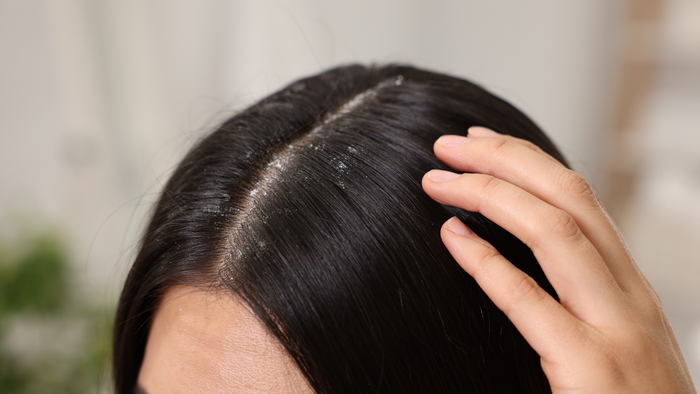
Small, fine, white or greyish flakes. Scalp feels tight, especially after washing. Often accompanied by dry skin elsewhere — shins, hands, face. This is a moisture problem, and it is the most common winter presentation by a wide margin.
Dandruff
Larger, yellowish, slightly greasy flakes that clump. The scalp may feel oily rather than tight. This is driven by a yeast called Malassezia, not by dryness — which is why slathering a dry scalp treatment on it does nothing.
Irritation and sensitivity
Redness, stinging, a scalp that reacts to products it used to tolerate. This is barrier damage, and the answer is to strip everything back rather than add more actives.
Getting this wrong is common enough that we wrote a whole piece on it: Dry Scalp vs Dandruff: How to Tell the Difference (and Fix It). If you are not certain which camp you are in, start there.
A winter scalp care routine that actually works
Five changes, in order of how much difference they make.
1. Turn the water temperature down
If you do nothing else, do this. Lukewarm — not hot — for the final rinse at minimum. A hot shower feels wonderful on an itchy scalp and is actively making the itch worse. Most people notice a difference within a week of changing nothing else.
2. Wash gently, not less often
There is a persistent myth that washing less fixes a dry scalp. It usually does not. Product build-up, dead skin and sebum sitting on an irritated scalp for a week makes flaking worse, not better. What matters is how you wash, not how often.
Switch to a sulphate-free, non-stripping formula and give it time to work at the scalp rather than piling it onto your lengths. If your scalp runs dry and tight, the dry scalp range is the right starting point.
3. Treat the scalp directly
Shampoo is a cleanser — it is on your head for ninety seconds and then it is gone. Real change comes from a leave-on treatment.
For a dry, tight, flaking scalp, De Lorenzo Scalp Balance Toner 125ml is a leave-on tonic formulated for exactly this — flaking and itching where the scalp is dry rather than oily. Apply it to a towel-dried scalp in sections and leave it in.
If your flaking is the larger, greasier, dandruff-type variety, you want a different tool. La Biosthétique Single Use Purifying Dandruff Peeling 20ml is a targeted single-use treatment that lifts visible dandruff while calming the skin underneath, and pairing it with De Lorenzo Scalp Control Conditioner 200ml keeps the lengths conditioned without re-greasing the roots.
4. Massage — properly
Scalp massage does two useful things in winter: it lifts dead skin before it becomes a visible flake, and it distributes the natural oils that your scalp is producing but that never make it past the roots.
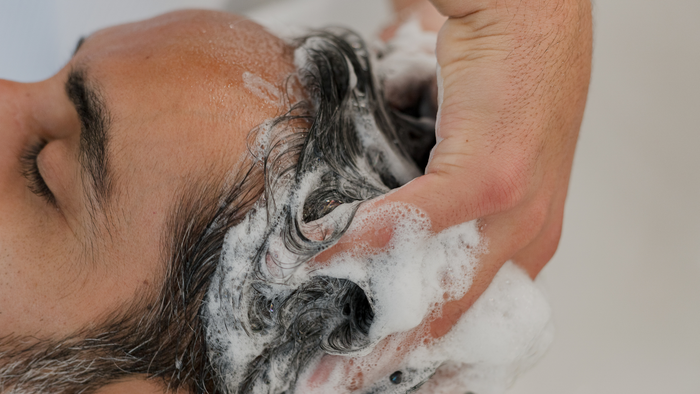
Fingertips work. A dedicated tool works better and stops you scratching with your nails, which is how a mildly dry scalp becomes an inflamed one. The Unwritten Massage Brush is designed to be used with shampoo in the shower — soft enough not to scratch, firm enough to actually shift build-up.
5. Protect against the dry indoor air
If your scalp is genuinely sensitive — reactive, stinging, red — strip your routine back to the gentlest thing you own. La Biosthétique Babybios Conditioning Spray 250ml is a lightweight leave-in built for sensitive hair and scalps, and it adds moisture back without the heavy oils that can aggravate a dandruff-prone scalp.
Winter scalp mistakes we see constantly
- Scratching with fingernails. It breaks the skin, and broken skin flakes more. Press and massage with fingertips instead.
- Reaching straight for an anti-dandruff shampoo. If your problem is dryness, a strong anti-dandruff formula strips an already-stripped scalp.
- Putting hair oil on the scalp. Oil on a dry scalp does not rehydrate it — it sits on top and can feed dandruff-causing yeast. Oils belong on mid-lengths and ends.
- Going to bed with damp hair. In a heated bedroom this is a recipe for an irritated scalp by morning.
- Wearing an unwashed beanie every day. Wash it. It sits directly on the skin you are trying to heal.
How long before it improves?
Give any change three to four weeks. The scalp's barrier takes roughly 28 days to turn over, so a treatment you have used twice has not failed — it has not finished. The exception is water temperature, which usually shows results within days.
Browse the full scalp care range if you want to build a complete winter routine rather than treating a single symptom.
When to stop self-treating
Book in with a professional if you have persistent redness, weeping or crusting patches, sudden or patchy hair loss, or flaking that has not budged after six weeks of a consistent routine. Those can point to seborrhoeic dermatitis, psoriasis or an underlying condition that needs proper diagnosis rather than a different shampoo.
Not sure what you are dealing with? Find a HUSL pro near you — a stylist can look at your scalp directly and tell you in thirty seconds what an internet article never can.
Frequently Asked Questions
Does winter actually cause dandruff, or does it just make it worse?
Winter does not create dandruff, but it reliably worsens it. The yeast behind dandruff is present on almost everyone's scalp year-round; a barrier weakened by cold air and hot water simply gives it an easier run.
Should I wash my hair less in winter?
Not usually. Washing less leaves build-up and dead skin sitting on the scalp, which makes flaking look worse. Keep your normal frequency and change the water temperature and the formula instead.
Can I use a face moisturiser on my scalp?
Don't. Facial moisturisers are formulated to sit on bare skin, not to be worked through hair — they will leave your roots greasy and flat without meaningfully hydrating the scalp. Use a scalp-specific leave-on tonic.
Why is my scalp dry but my hair still greasy?
Very common in winter, and usually a sign of an over-stripped scalp overcompensating with oil. It is a barrier problem, not an oiliness problem. We cover it in detail in Is Your Scalp Barrier Compromised?
Do beanies cause flakes?
Not directly, but they trap heat, sweat and friction against the scalp, and an unwashed one reintroduces build-up every time you wear it. Wash your beanies as often as you would a t-shirt.
Is it worth using a scalp scrub in winter?
Physical scrubs can help lift flakes, but on a barrier that is already compromised they often do more harm than good. In winter, a gentle leave-on treatment plus regular massage is the safer route for most people.
Featured in this story