
Washed This Morning, Oily by Lunch? What’s Really Happening at Your Roots
Understand why your scalp feels oily after washing and how to rebalance it with professional care.
Washed This Morning, Oily by Lunch? What’s Really Happening at Your Roots
Few things are more frustrating than freshly washed hair that refuses to stay fresh.
You’ve blow-dried it properly. You’ve avoided heavy styling products. And yet, by midday, the crown looks flat and separated.
If this sounds familiar, the issue likely isn’t your hair. It’s your scalp regulation.
The Rebound Effect
One of the most common causes of rapid oil return is over-stripping.
When shampoos cleanse too aggressively, they remove not only excess sebum but also protective lipids. The scalp responds defensively — by producing more oil.
This rebound effect can happen within hours.
The result? Roots that look oily faster than before you switched to the “stronger” shampoo.
Product Congestion
The opposite can also be true.
If your shampoo is too rich, or if conditioner creeps too close to the root, residue can accumulate. What looks like oil may actually be a combination of sebum and leftover product film.
Dry shampoo layering can contribute as well. When not fully removed, it mixes with natural oil and creates a heavier appearance.
In professional settings, we often clarify strategically to reset build-up — but not daily. Clarifying is corrective, not habitual.
Technique Is Underrated
How you wash matters.
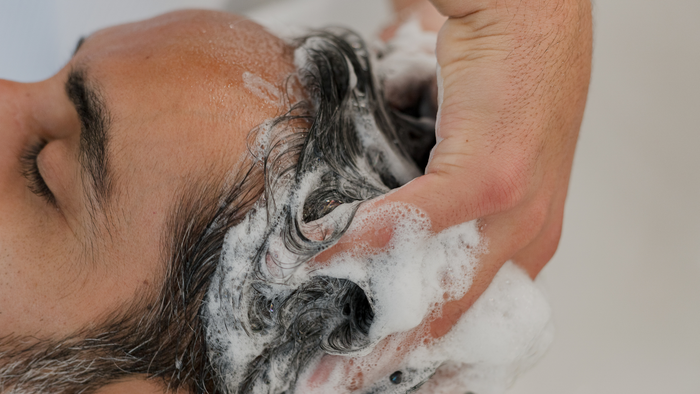
Hair should be fully saturated before shampoo application. The product should be massaged into the scalp, not scrubbed aggressively into the ends. Rinsing should take longer than you think.
And conditioner belongs mid-length to ends. Always.
A balanced professional shampoo, paired with correct technique, often extends freshness significantly — not through force, but through regulation.
If oil returns unusually fast despite adjustments, it may be time to reassess formulation.
Stability, not squeakiness, is the benchmark.