heat protection
Hair Straightener Temperature: What the Number Actually Means
Hair Straightener Temperature: What the Number Actually Means
Every straightener, wand and hot brush has a number on it, and almost every argument about heat damage turns into an argument about that number. The honest answer on hair straightener temperature is more useful than a single safe setting, because the two laboratory figures everyone quotes are not measuring the same thing. One is the dry number and one is the wet number, and once you know which is which, the thing you should actually watch in the bathroom turns out not to be the dial at all.
This is a piece about what the reading on a hot tool does and does not tell you. It is deliberately not a guide to which setting suits your hair, because that depends on strand diameter, porosity and colour history, and it is covered properly in our guide to heat styling damage and how much is too much for your hair type. Take the setting advice from there. Take the mechanism from here.
What hair straightener temperature actually controls
The dial sets a target for the plates. It does not set a temperature for your hair, and the gap between those two things is where most of the confusion lives.
A hot tool holds its reading by cycling a heating element on and off around a set point, so the plate surface sits in a band rather than at a fixed value. The moment the plates close, heat flows out of them and into the hair, and the plate surface cools. How much energy reaches the cortex depends on how long the plates are in contact, how many times you pass over the same section, how thick that section is, and how much water is in the way.
That last variable is the one almost nobody accounts for, and it is the biggest of the four.
We have not measured plate temperatures for the tools we stock and will not invent a figure. What follows is the published science on the fibre, which is measurable, plus what our own listings do and do not disclose.
The two figures everyone quotes, and which is which
Hair is mostly keratin, and in the cortex that keratin is wound into a coiled structure called an alpha helix. Heat it far enough and the helix unwinds. That transition is what calorimetry can measure, and it has been measured repeatedly.
In dry hair, the helix denatures at around 230°C. Modulated differential scanning calorimetry work on human hair describes a denaturation peak for the helical filaments at roughly that figure. A doctoral thesis on heat-induced denaturation of hard alpha keratins puts the dry peak in a 230°C to 260°C range at a heating rate of 10°C per minute, with one published trace peaking at 233.7°C and again at 243.4°C. A 2019 study that flat-ironed hair at 200°C identified keratin denaturation peaks at around 220°C and 230°C and gave the typical straightening range as 150°C to 250°C.
In wet hair, the same transition happens at around 150°C. Water acts as a plasticiser: it softens the protein matrix, and the denaturation peak moves down by something like 80°C. The same thesis records wool shifting from roughly 230°C dry to about 140°C in excess water, and hair measurements placing the wet peak near 150°C.
This matters because the figure that circulates online as the point where hair protein starts to break down is usually the lower one. It is a real measurement. It is the measurement for hair with water in it.
What these numbers are not
An assumption worth stating out loud, because it changes how much weight the figures can carry. These are calorimetry results: a small sample heated slowly and steadily in a sealed pan, typically at about 10°C per minute, with the instrument watching for the energy the transition absorbs. That is not a hot plate pressed against a section for two seconds.
So the numbers tell you where the protein changes state under controlled conditions. They do not draw a line on the bathroom floor at which one pass becomes unsafe. Nobody has published that line for a consumer straightener on a human head, and we are not going to pretend otherwise. Treat 230°C and 150°C as a map of the territory, not as a pass or fail mark.
Why damp hair is the real risk, not a high setting
Put the two figures together and the practical conclusion inverts the usual advice. Because the transition sits near 150°C while there is water in the fibre, a tool on a moderate setting pressed onto damp hair can be working at or above the wet transition, while the same tool on a higher setting on genuinely dry hair may not be. The moisture state of the hair at the moment the plates close does more to decide the outcome than the position of the dial.
There is also a documented failure mode that only happens this way. Bubble hair is a shaft abnormality in which cavities form along the fibre, and under a scanning electron microscope the shaft looks hollowed out, variously described as having large central cavities or a Swiss cheese appearance. A 2017 dermatology review attributes it to heat rather than to any inherent defect, explains that the cavities develop as moisture or gas inside the hair expands, and gives 175°C to 215°C for five minutes as sufficient to produce them. The same review notes the threshold could be substantially lower if the heat is applied to damp hair, and describes a case traced to a blow-dryer overheating to 149°C because its air intake was blocked.
Those are case reports rather than a dose-response curve, so read them as documented instances, not a schedule. The mechanism is not in doubt: trapped water turning to steam inside a fibre does structural damage that no product reverses.
The useful consequence is about sequence rather than settings. Finish drying before you start styling. Tools built for the job say so in their own specifications: the Evy Professional Restyle Hot Brush 38mm is described by the manufacturer as designed for styling dry hair, which is a genuine instruction rather than marketing hedging, and it is the one to reach for on second-day hair instead of rewetting and starting again.
Why the top of the dial is not a stronger version of the middle
Below the denaturation range, straightening works by temporarily disrupting hydrogen bonds in the hair while it is warm and holding the new shape as it cools. That change is reversible, which is exactly why a poker-straight finish drops in humidity. Nothing has been permanently rearranged.
At and above the measured range for dry hair you are no longer doing that. You are unwinding the protein structure itself, and that does not undo. So the top of the dial is not a more powerful version of the middle in any way that benefits the style. It is a different category of change, permanent instead of temporary, and the straightness does not last longer for it. The reason to run high, if there is one, is speed on coarse or dense hair, which is a trade rather than a free upgrade.
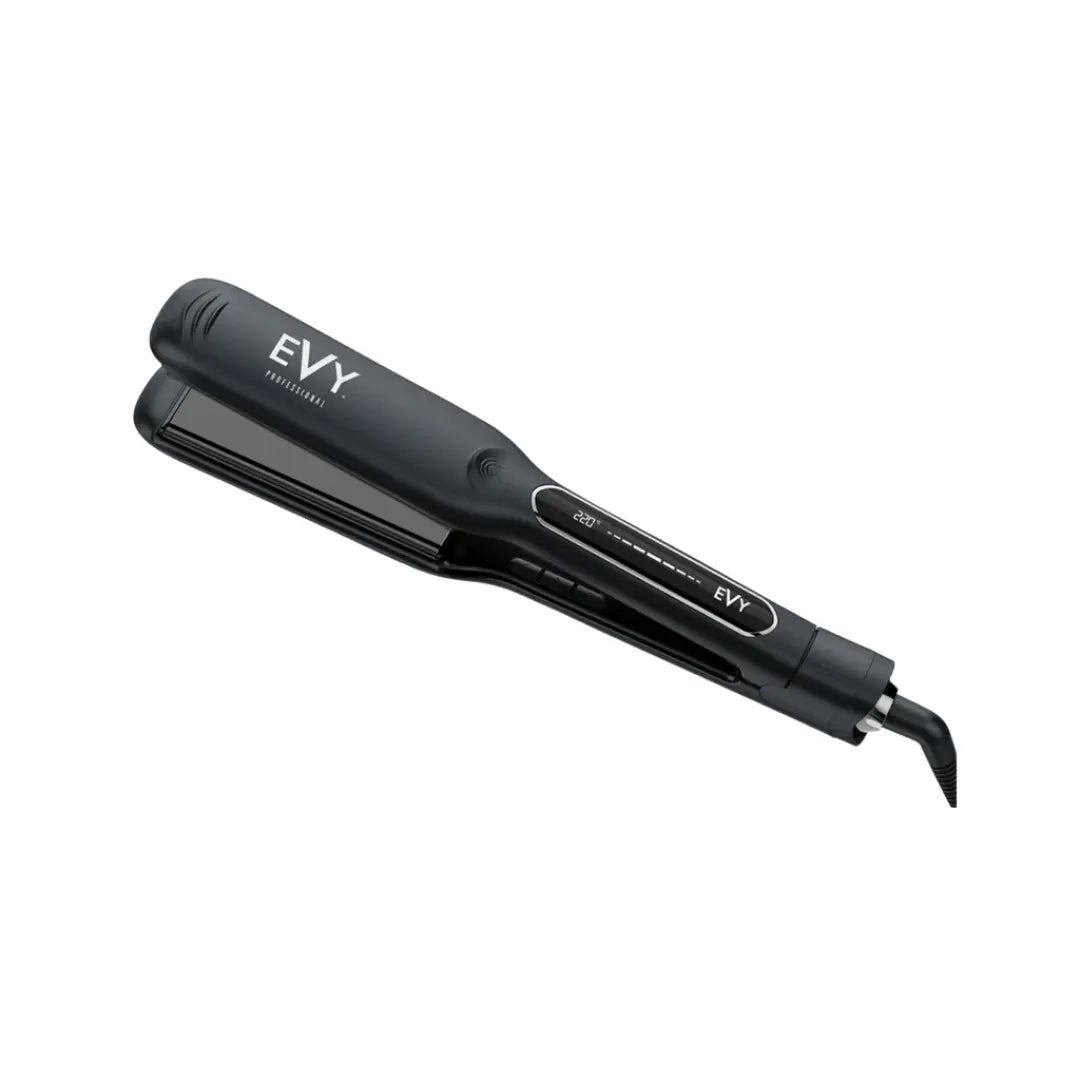
The variable people underrate here is passes. One slow, controlled pass puts less total energy into a section than three quick ones at the same reading, even though the dial never moved. Plate geometry is partly a way of buying fewer passes: the Evy IQ OneGlide Pro carries extra-long 11cm plates with 30mm width per its listing, and the Pro Max version uses wider 40mm plates for the same reason. How much that reduces total heat exposure is not measured on our side, so we are not putting a percentage on it.
What the number on your tool does not guarantee
This is the part that should change how you shop, and it is awkward for us as a retailer to write.
Our own listings for the Evy straighteners publish plate length, plate width, the coating and the styling claims. They publish neither a temperature range nor an accuracy tolerance. That is not specific to Evy. Across hot tools generally, a maximum temperature is a marketing figure where it appears at all, and a tolerance, meaning how far from the stated number the plate may actually sit, is almost never disclosed.
Two things follow from that:
- You cannot meaningfully compare one brand's 200 against another brand's 200, because neither number has a published test behind it.
- You cannot know how close your own tool is running to its reading, and an older tool with a tired thermostat or a blocked intake can sit well above it. The blow-dryer in that bubble hair case was a normal appliance behaving abnormally.
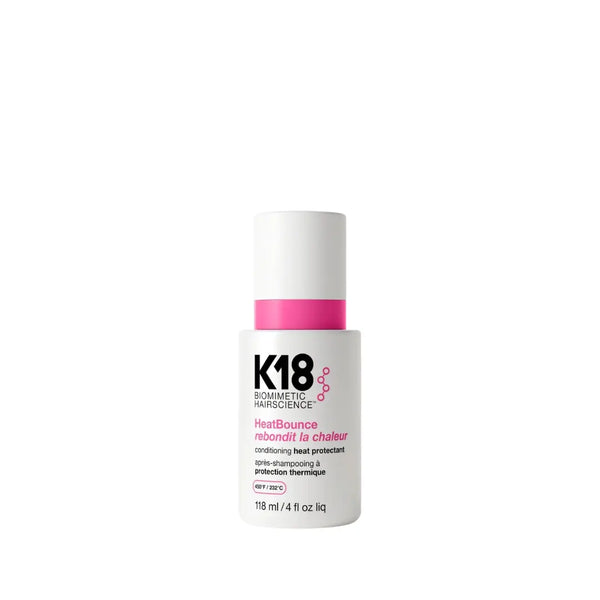
The same caution applies to protectant ratings. Where a heat protectant quotes a temperature it is shielding to, that is the brand's own figure from the brand's own testing, not an independent certification. As an example, the listing for K18 Heatbounce 118ml quotes a reduction in breakage of up to 85% after blow-drying rather than a temperature rating at all. That is K18's claim, we have not verified it, and neither sort of figure is a guarantee of safety at any particular setting.
How to use any of this
None of this argues for abandoning hot tools. It argues for moving your attention off the number and onto what you actually control.
- Get the hair genuinely dry first. This is the single highest-value habit in the whole article, because it moves the fibre from the 150°C world to the 230°C world before any plate touches it.
- Fewer and slower beats more and faster. Section properly so one pass does the job, rather than going back over the same piece because the first attempt was rushed.
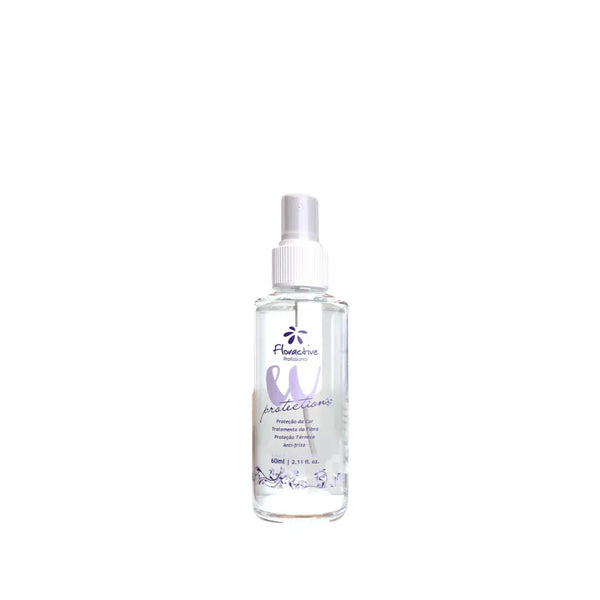
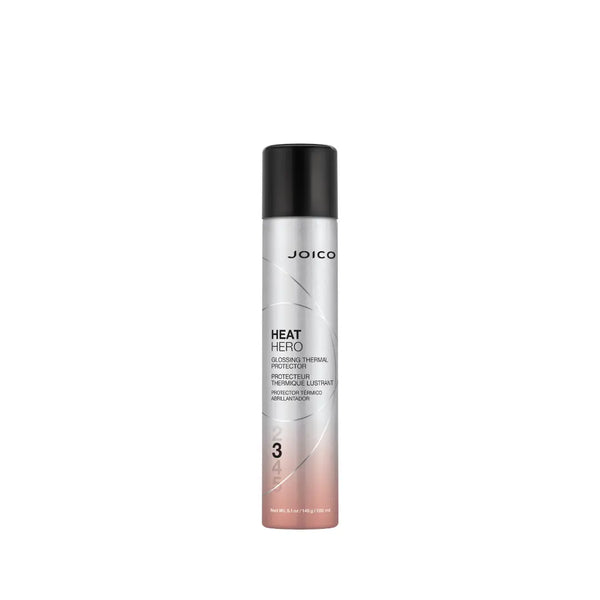
- Protect every time, including quick jobs. A light daily spray such as Floractive W Protection 60ml or a salon option like La Biosthetique Heat Protecting Spray RT 100ml both work on the same principle of slowing heat transfer and moisture loss. Which formula suits you is a separate question, and we have compared the options honestly in our guide to the best heat protectant spray. Browse the full heat protection collection if you want to see the range.
- Judge by the hair, not by the dial. If the mid-lengths feel rougher and the ends look more see-through a month into a new routine, the setting was too high for your hair whatever the number said. The fibre is the only instrument you have that is actually calibrated to your head.
- Do not chase the maximum for longevity. It will not make a style hold longer, for the structural reason above.
If you are replacing a tool, buy on the specifications that are published and verifiable, which are plate size, weight, voltage and what is in the box, and compare across the tools and accessories range on those. Treat proprietary coating and ion language as the brand's own description until someone publishes the test.
One thing here is not a styling question at all. If your hair snaps at the same point along the length, feels gummy when wet, or if you are seeing increased shedding, a widening part, or a scalp that is persistently sore, itchy, flaking or weeping, no change of setting fixes that. Scalp and shedding symptoms can have medical causes and belong with a GP or a dermatologist. For condition and styling, someone who can put your hair between their fingers will get further than any article, and you can find a HUSL pro near you.
Frequently asked questions
Is 150°C or 230°C the temperature hair starts to be damaged at?
Both figures are real and they describe the same transition in different conditions. Keratin's helical structure denatures at around 230°C in dry hair and at around 150°C when the hair is wet, because water plasticises the protein. The lower figure is the one usually quoted online without the wet qualifier, which is why it causes so much confusion.
Can I straighten my hair while it is still slightly damp?
It is the thing most worth avoiding. With water still in the fibre the denaturation temperature drops by roughly 80°C, and trapped moisture flashing to steam is the mechanism behind bubble hair, where cavities form inside the shaft. Dry first, then style.
Does a lower setting mean I need more passes, so is it actually better?
It can, and it is a fair question. Nobody has published the trade-off for consumer tools, so judge it on your own hair: if a moderate setting takes three passes and a slightly higher one takes a single clean pass, the second may well put less total energy in. What you should not do is run high and still take three passes.
Is my straightener's temperature reading accurate?
There is no way for you to know from the packaging. Hot tool listings, including our own, publish plate dimensions and coatings rather than a temperature tolerance, so the reading is a set point rather than a verified measurement. Keep the tool clean, replace one that behaves oddly, and do not treat the display as precise.
What temperature should I use for my hair type?
That is a different question from this one and it depends on diameter, porosity and colour history. Our guide to heat styling damage for your hair type covers it, and a stylist who can assess your hair in person will narrow it further.
Does a heat protectant let me style hotter safely?
No honest brand claims that, and it is the wrong way to read the product. A protectant slows how fast heat moves into the fibre and how fast water leaves it. That is a buffer, not a licence to raise the setting, and any temperature a protectant quotes is the brand's own figure rather than an independent rating.
Why does my straight hair go wavy again in humidity?
Because below the denaturation range you have only disrupted hydrogen bonds temporarily, and humidity lets the hair take its own shape back. That reversibility is a sign the styling was gentle, not that the tool was too cool.
The short version
The number on your straightener is a set point for the plates, not a temperature for your hair, and it has no published accuracy behind it. Keratin's helix denatures near 230°C dry and near 150°C wet, which means the water in your hair moves the goalposts by about 80°C and matters more than the dial does. Dry properly, pass fewer times, protect every time, and judge the result on how the fibre feels a month later rather than on the figure in the display.
Featured in this story