
How to Brush Your Hair Properly (Without Causing Breakage)
Learn how to brush correctly to prevent breakage.
How to Brush Your Hair Properly (Without Causing Breakage)
Brushing your hair feels simple — but done incorrectly, it’s one of the most common causes of mechanical damage. Breakage rarely happens in one dramatic moment. It builds slowly through tension, friction and repetition.
Healthy brushing is about control, not force.
Start from the Ends — Always
The biggest mistake people make is starting at the roots. When you brush top-down through tangles, you tighten knots and pull against the scalp.
Instead, begin at the ends. Gently detangle small sections, then gradually move upward while supporting the strand near the root with your free hand. This reduces tension across the fibre.
Wet Hair Needs a Different Approach
Hair is most fragile when wet because internal bonds are temporarily weakened. If you brush aggressively at this stage, stretching and snapping occur more easily.
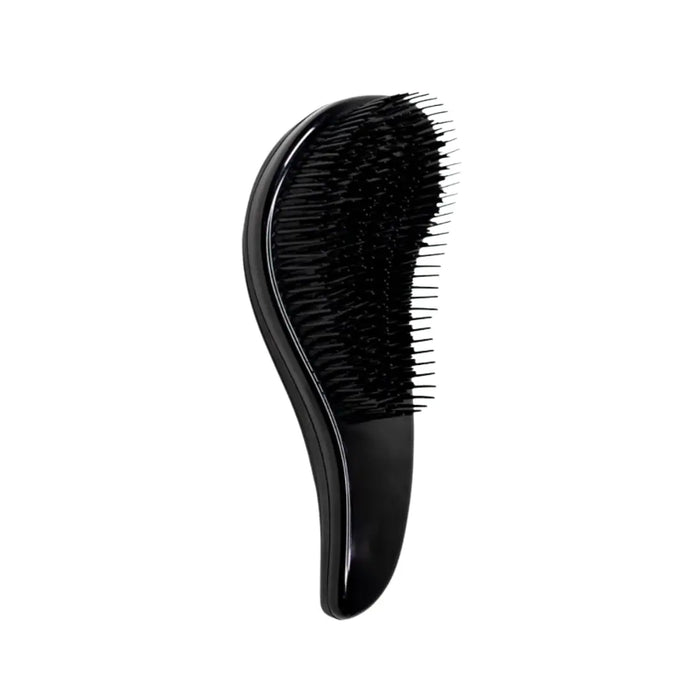
Use a wide-tooth comb or flexible detangling brush. Apply conditioner or leave-in first to create slip. Work in sections and never rip through resistance.
Choose the Right Tool for Your Hair Type
Fine hair benefits from lightweight brushes with flexible bristles. Thick or coarse hair requires sectioning and stronger tools. Curly hair often responds best to wide-tooth combs or finger detangling.
Boar bristle brushes are excellent for smoothing and oil distribution — but they are not detanglers.
Heat + Brushing = Compounded Stress
When brushing during blow-drying, tension and heat combine. Always apply a professional heat protectant and avoid dragging the brush repeatedly over the same section.
The Professional Standard
Healthy brushing is controlled, patient and strategic. Start at the ends, support the fibre, match the tool to the hair type, and protect before heat. Small technique changes prevent long-term thinning.