
clarifying
Winter to Spring Hair Routine: What to Change and When
Spring starts 1 September. Five specific swaps — made in the right order across three weeks — that stop your hair carrying winter's heaviness into spring humidity.
Spring starts on 1 September, and Australian hair notices the changeover before the calendar does. A winter to spring hair routine is not a full product overhaul — it is four or five specific swaps, made in the right order, that stop your hair carrying August's heaviness into October's humidity.
Here is what actually changes, why, and when to make each move.
Why your winter routine stops working in spring
Winter hair care is built around scarcity. The air is dry, you wash less often, you wear beanies, you run hot showers, and you compensate with richer masks, heavier oils and more leave-in product than you would use in January. That is the correct response to cold, dry air — but it leaves a residue.
By late August most people are carrying three overlapping problems:
- Build-up. Months of heavier conditioners, dry shampoo and styling product, applied to hair that has been washed less frequently.
- A confused scalp. Beanies, indoor heating and reduced washing shift oil production; when that reverses in spring, roots get greasy faster than you expect.
- Real structural damage. Hot water, hot tools and friction from collars and knitwear accumulate quietly over a cold season.
Then the weather turns. Humidity climbs, you sweat more, you wash more often, and the same rich products that were saving your hair in June start making it flat, greasy and — counterintuitively — frizzy. Heavy product plus humidity is the classic spring frizz combination.
The winter to spring hair routine, step by step
Do these in order. Each step assumes the one before it.
Step 1 — Reset before you rebuild
Start with one thorough clarifying wash. Not a permanent switch, a single reset. Everything you do afterwards works better on hair that is not already coated.
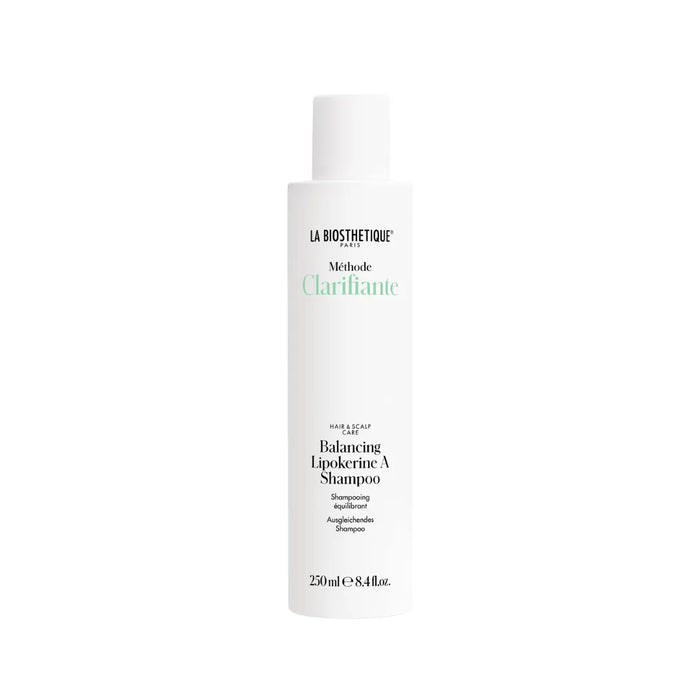
The DunGüd Reset Detox Shampoo 250ml is built for exactly this: it lifts oil and product build-up in one wash. Work a small amount into damp hair, lather, rinse and repeat once. Follow it with a normal conditioner on the mid-lengths and ends only — clarifying shampoos are meant to be a little stripping, and the conditioner puts back what you want to keep.
Do this once, in the last fortnight of August. Doing it weekly is overkill and will dry out your lengths.
Step 2 — Lighten your conditioning layer
This is the change that makes the biggest visible difference, and the one people leave too late.
Swap the winter mask for something quick-absorbing. The La Biosthétique Protective Conditioning Fluid RT 125ml is a leave-in fluid rather than a cream — it evens out the hair structure and guards against breakage and pollution particles without the weight of a mask. Applied to damp mid-lengths, it disappears in about a minute.
If you rely on a leave-in spray day to day, the Microtexx Instant Spray Protector 250ml is the lighter option: it hydrates, detangles and protects without building up over consecutive days, which matters once you are washing more often. Both live in the treatments collection alongside the heavier winter formats you are stepping away from.
You do not need to throw the winter mask out. Move it to once a fortnight instead of once a week, and keep it for the ends only.
Step 3 — Add humidity protection before you need it
Frizz is not a personality trait, it is a moisture gradient. Hair that is drier than the air pulls water in from the atmosphere, the cuticle lifts, and the strand swells unevenly. Spring humidity finds every gap that winter created.
A lightweight smoothing serum on damp hair, before you dry it, seals the cuticle and closes that gradient. The O&M Frizzy Logic Serum 50ml is sheer enough to use on fine hair and does the nourishing work at the same time. A little goes a long way — start with one or two drops through the mid-lengths and add more only if you need it.
Start this in the last week of August rather than waiting for the first sticky day. Preventing frizz is straightforward; rescuing a strand that has already swollen is not.
Step 4 — Change what you protect against
Your winter enemy was heat and dryness. Your spring enemies are UV and sweat, and most people never make this swap at all.
Australian spring UV is genuinely strong by mid-September, and hair colour fades faster in sunlight — brunettes go brassy, blondes go warm, and reds fade fastest of all. The Floractive W Protection 60ml is a daily spray that covers both jobs: thermal protection for styling and a shield against environmental stress, so you are not carrying two separate products. Use it on damp hair before drying, and re-apply to dry hair before a long stretch outdoors. The rest of the daily-use options sit in the styling collection.
Step 5 — Adjust your wash frequency gradually
If you have been washing twice a week through winter, do not jump straight to every second day. Sebum production adapts to your washing pattern, and a sudden increase in frequency usually produces the exact greasiness you were trying to solve.
Add one extra wash per week and hold it for a fortnight before adding another. On the in-between days, refresh rather than wash — our guide to refreshing second-day hair covers the techniques that buy you a day without dry shampoo build-up.
What to do about your scalp
Scalp is where winter damage shows up latest and lasts longest. Flaking, tightness and itch that developed under beanies and heating do not resolve on their own the moment the weather warms — and once you start washing more frequently, an already-irritated scalp gets worse before it gets better.
The clarifying wash in Step 1 handles build-up. What it does not handle is barrier irritation, which needs gentleness rather than cleansing. If your scalp has been tight, itchy or flaking through winter, work through winter scalp care first and get it settled before you increase your wash frequency. Doing it in the other order rarely works.
Two practical adjustments that cost nothing: drop your shower temperature, which you will want to do anyway as the mornings warm, and stop scrubbing with your fingernails. Fingertips, moderate pressure, thirty seconds.
A realistic timeline
Mid-to-late August
Clarifying reset. Move the winter mask to fortnightly. Introduce the lighter leave-in.
Late August to early September
Add the smoothing serum before the first humid week. Start the UV and heat protection spray. Begin nudging wash frequency up, one wash at a time.
Mid-September
Assess honestly. If the ends still feel dry after four weeks of lighter products, the issue is damage rather than moisture, and the answer is a trim rather than more product. If the roots are greasy, you have increased wash frequency too fast — hold steady for a fortnight rather than washing more.
Book the seasonal appointment
Spring is the sensible time for a cut, because winter breakage tends to sit in the last two or three centimetres and no product removes it. It is also the right moment to reassess colour before summer sun starts working on it. A stylist looking at your hair in person will tell you in thirty seconds what four weeks of product experiments would — find a HUSL pro near you and go in with the specific question rather than a general one.
Frequently Asked Questions
When should I start changing my winter to spring hair routine?
Mid-August, roughly two weeks before the meteorological changeover on 1 September. Making the swaps before the humidity arrives is much easier than reacting once your hair is already misbehaving. In cooler parts of the country you can push it a week later; in Queensland and northern New South Wales, a week earlier.
Do I need to replace all my winter products?
No. Most winter products are still useful, just less often — that is the whole approach. Rich masks go fortnightly and ends-only. Heavy oils become an overnight treatment rather than a daily finish. The only genuine additions are humidity protection and UV protection, because winter routines rarely include either.
Why is my hair frizzier in spring than in winter?
Because humidity rises and your hair is still carrying winter damage. A porous, cuticle-lifted strand absorbs atmospheric moisture unevenly and swells, which is what frizz physically is. Heavy leftover winter product makes it worse by weighing the strand down while doing nothing to seal it. Lighter product plus a smoothing serum addresses both halves.
Should I clarify more than once during the changeover?
Once is normally enough. If you use a lot of dry shampoo or styling product, a second clarifying wash three or four weeks later is reasonable — but more than monthly starts stripping colour and drying out mid-lengths, which creates a different problem.
My scalp got itchy in winter and still is. Will spring fix it?
Not on its own, and increasing your wash frequency may aggravate it. Settle the scalp first with gentler washing, cooler water and no nail-scratching, then increase frequency once it has calmed. If it persists past a few weeks or you are seeing genuine flaking rather than dryness, have a stylist look at it rather than continuing to experiment.
The short version
Clarify once. Go lighter on conditioning. Add humidity protection and UV protection. Increase wash frequency slowly, and sort your scalp before you do. Five changes, spread across three weeks, and your hair arrives in spring without dragging winter behind it.